
Learn why small rooms require different camera techniques in real estate photography and video, from lens choice and camera placement to movement and distortion.
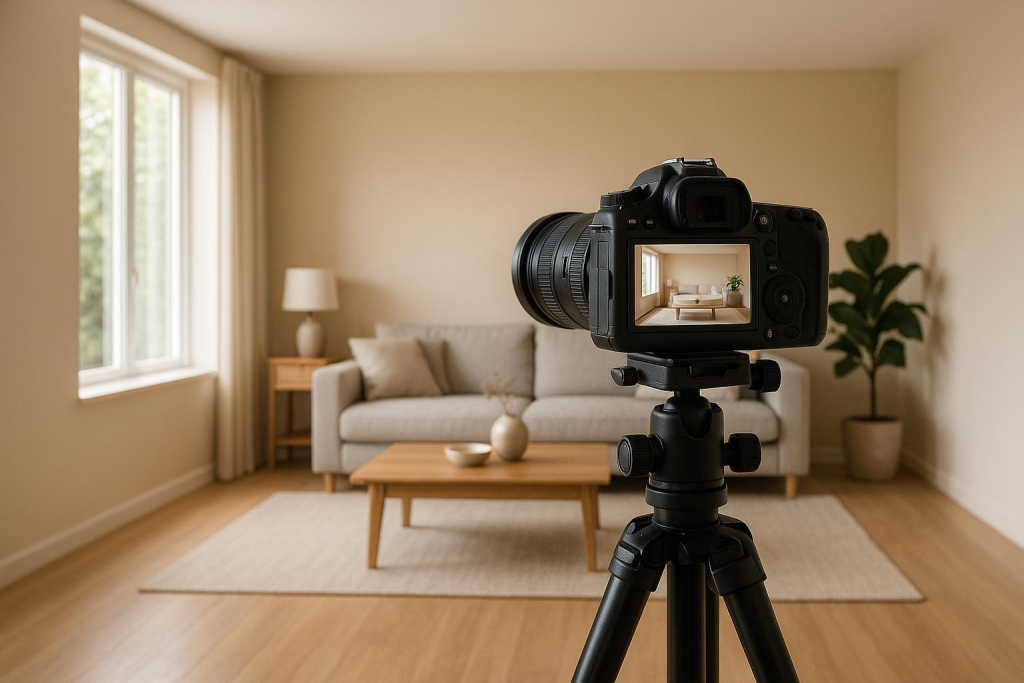
1. Camera Position Matters More in a Small Room
In a large room, moving the camera a few feet may not dramatically change the composition.
In a small room, even a small movement can completely change what appears in the frame.
Placing the camera too close to a wall can make nearby objects look disproportionately large. Moving too far into a corner may introduce distracting furniture or door frames.
A good starting point is to find the position that gives the camera the clearest view of the room without forcing the lens to exaggerate its dimensions.
Corners can be useful because they often provide the widest perspective, but they should not automatically be the default position.
The best camera position depends on the room’s layout, furniture placement, doors, windows, and the feature that needs to be highlighted.
2. Wide-Angle Lenses Help, but They Can Also Create Problems
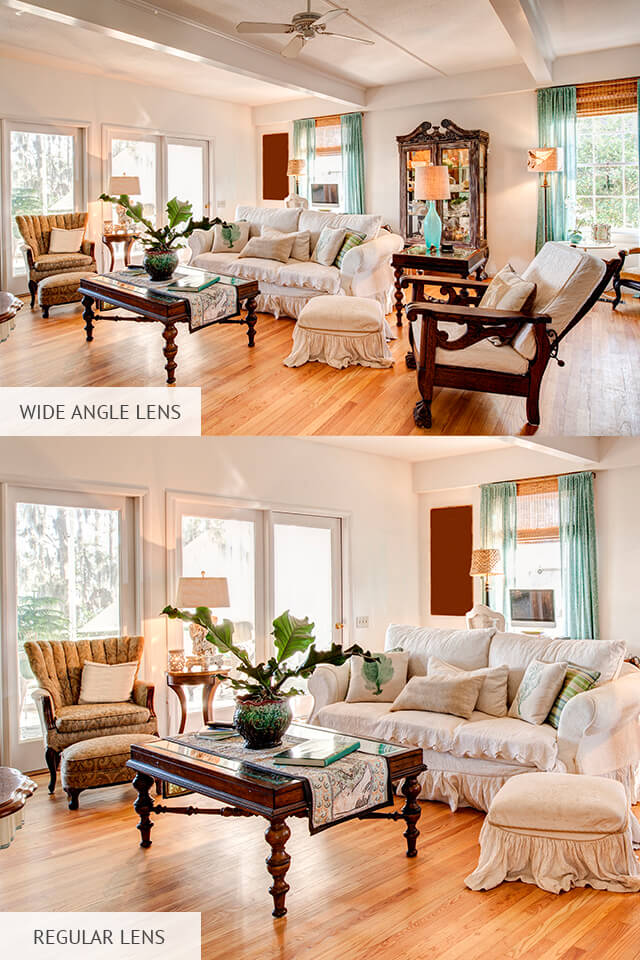
Wide-angle lenses are common in real estate photography and videography because they allow more of a room to fit into the frame.
They are especially useful when physical space is limited.
However, going wider is not always better.
An extremely wide lens can stretch objects near the edges of the frame. Cabinets may appear unusually long, walls can look curved, and furniture closest to the camera can appear much larger than it really is.
This distortion can make a small room look spacious at first glance, but it can also make the footage feel unnatural.
The goal should be to use enough width to show the room without exaggerating it.
3. Keep the Camera Level
Small rooms often contain strong architectural lines.
Walls, cabinets, countertops, door frames, and tiles can all reveal when the camera is tilted.
If the camera points too far upward or downward, vertical lines can converge or become distorted. This can make the room feel uneven and make post-production more difficult.
Keeping the camera level helps maintain a more natural representation of the space.
This is particularly important for bathrooms and kitchens, where straight lines and repeated patterns make distortion easier to notice.
4. Avoid Backing Into Corners Without a Plan
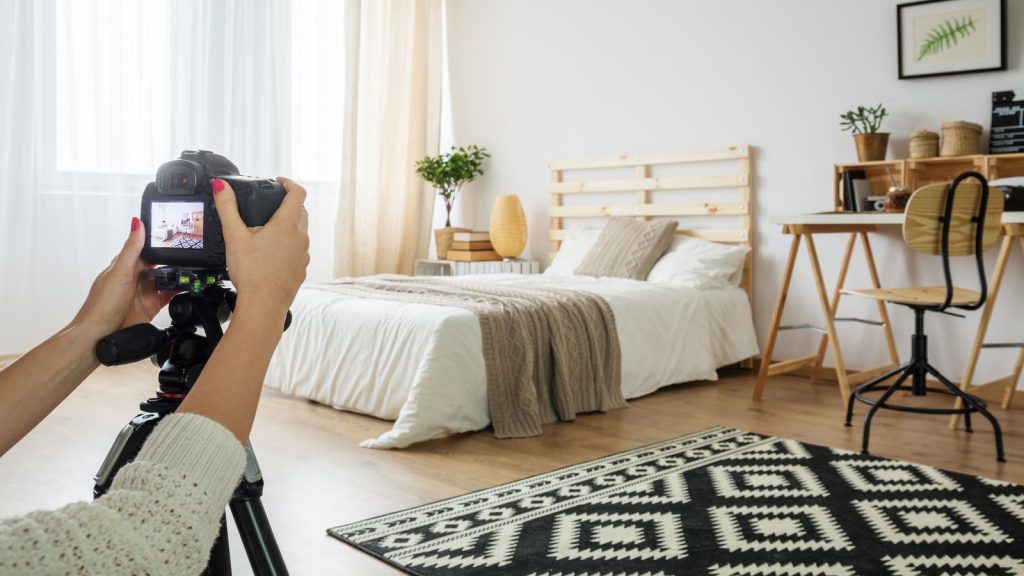
A common instinct when filming a small room is to move as far backward as possible.
This can create a wider composition, but it does not always produce better footage.
The camera may end up pressed against a wall, furniture may enter the foreground, or the shot may include unnecessary areas.
Instead of simply trying to get farther away, consider what the viewer actually needs to see.
If the purpose of the shot is to show the entire room, find the position that provides the most useful information. If the purpose is to highlight a feature, a slightly tighter composition may work better.
5. Camera Movement Should Be More Controlled
Large spaces give camera movement room to breathe.
Small rooms do not.
A fast push-in or wide sweeping movement can make a small space feel cramped because objects enter and leave the frame too quickly.
Controlled movements usually work better.
A slow push, gentle pan, or short reveal can provide enough motion to keep the video engaging without making the room feel chaotic.
Movement should also account for nearby walls and furniture. In a tight space, even a small mistake can create an unwanted collision, shake, or abrupt change in direction.
6. Use Doorways Strategically
Doorways can be extremely useful when filming small rooms.
Instead of immediately entering the room with the camera, a shot from the doorway can establish the relationship between the room and the surrounding space.
This can make the room easier to understand.
A doorway can also provide a natural frame around the room and create a transition point for the final video.
For example, a bedroom can be introduced from the hallway before cutting to a wider interior shot. This gives the editor a natural way to move from one space to another.
7. Furniture Placement Becomes Part of the Composition
In a small room, furniture can easily dominate the frame.
A bed, sofa, desk, or vanity positioned too close to the camera may appear much larger than it really is, especially when using a wide-angle lens.
This can make the room feel crowded.
Before filming, it is worth checking whether furniture is blocking important architectural features or creating distracting foreground elements.
The goal is not necessarily to remove everything.
Sometimes simply changing the camera position can create enough visual separation to make the room feel more balanced.
8. Mirrors Require Extra Attention
Bathrooms and bedrooms often contain mirrors, creating another challenge for small-room filming.
The camera may appear in the reflection, or the angle may reveal equipment and unwanted background details.
Because small rooms offer fewer places to hide, reflections need to be considered before recording.
Changing the camera height or angle can sometimes solve the problem without requiring a completely different composition.
This is another reason why filming a small room from one fixed position is not always enough.
9. Lighting Can Make a Small Room Feel Even Smaller
Small rooms often have limited natural light.
If the footage is too dark, corners can disappear and the space may feel more enclosed.
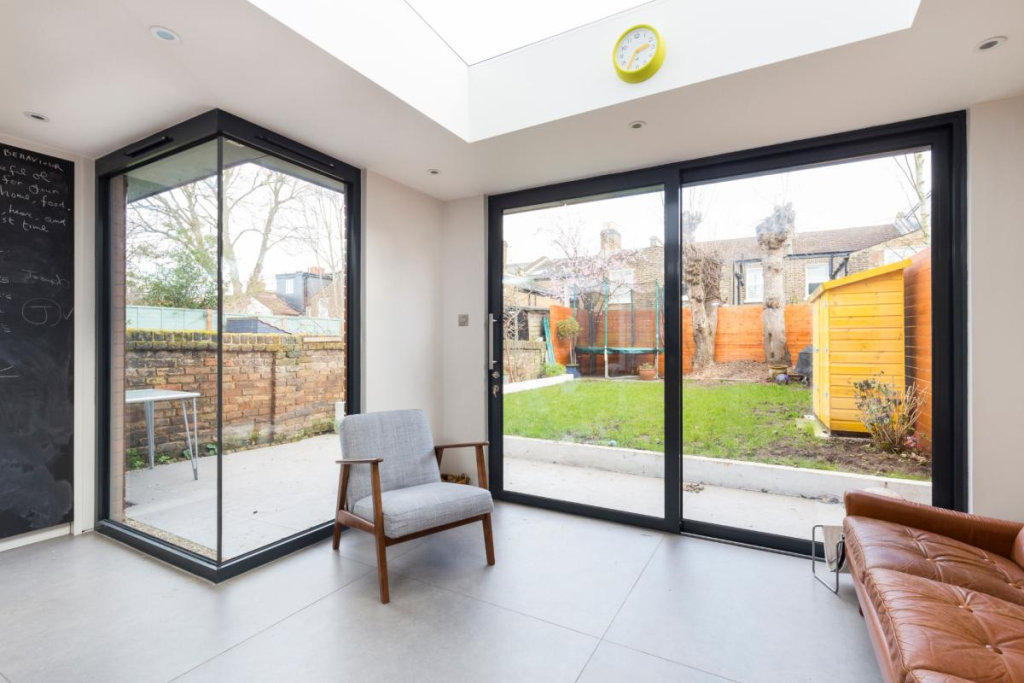
Windows can create the opposite problem. If the window is significantly brighter than the interior, exposing for the room may cause the outside view to become overexposed.
Good exposure is therefore particularly important in compact spaces.
Whenever possible, use available natural light strategically and avoid positioning the camera directly toward a strong light source unless the shot is intentionally designed that way.
10. Shoot More Than One Perspective
One wide shot may technically show the entire room, but it does not always provide enough material for a strong edit.
A small room can benefit from several complementary perspectives.
For example, you might capture:
- A wider shot from the doorway
- A corner-to-corner perspective
- A medium shot of the main feature
- A detail shot of finishes or fixtures
These shots give the editor more options without requiring excessive movement inside the room.
The key is variety without repetition.
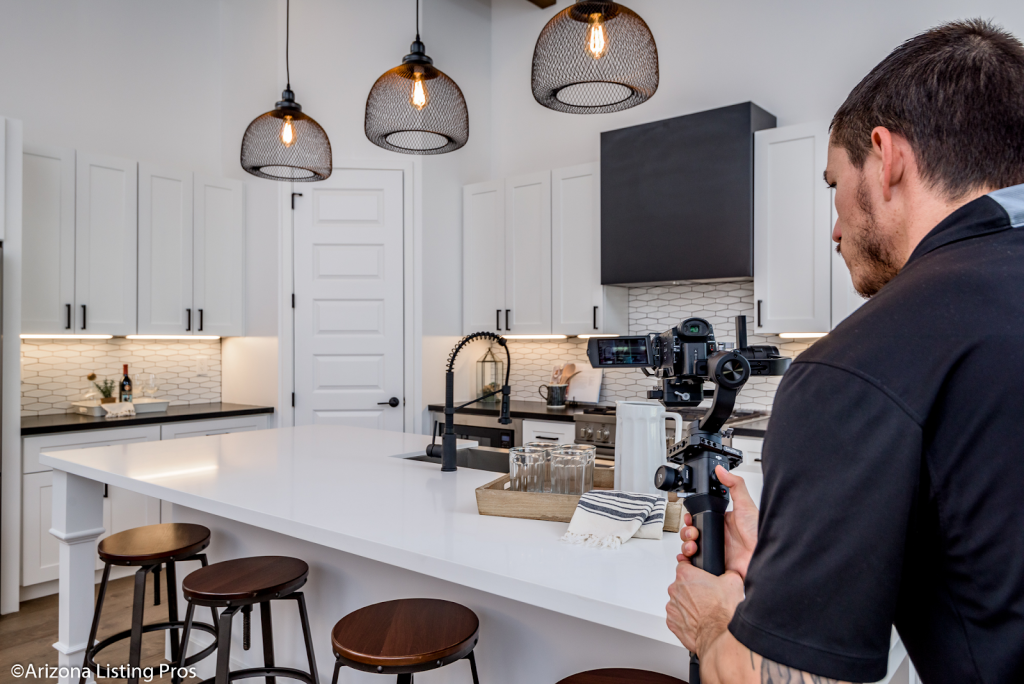
11. Small Rooms Need Accuracy More Than Drama
There is a temptation to make small spaces look much larger through extremely wide lenses and aggressive perspectives.
That approach can create an attractive frame, but it can also give buyers unrealistic expectations.
Real estate video should help viewers understand the actual property.
A small bedroom does not need to look like a luxury suite.
Instead, the footage should show how the room is laid out, what furniture fits inside, where the windows are, and how the space connects to the rest of the home.
Accurate presentation creates more useful information for potential buyers.
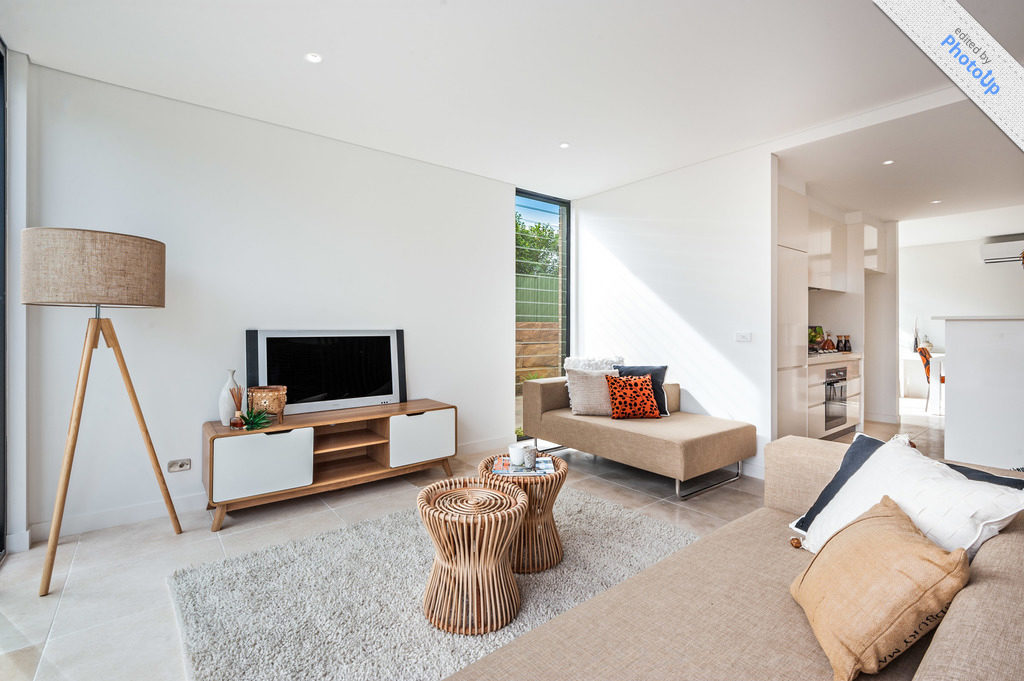
12. Better Filming Creates More Options During Editing
The challenges of small rooms do not end when filming stops.
Poor camera positioning, excessive distortion, inconsistent movement, and limited coverage can make the editing process much harder.
For example, if every shot from a small bathroom was filmed with extreme wide-angle distortion, the editor has limited options for creating a natural sequence.
If the footage includes different perspectives and controlled movements, the editor can choose the shots that best fit the pacing of the final video.
This is why filming and editing should not be treated as completely separate processes.
The way a small room is filmed directly affects what can be done with it in post-production.
Work with Lumatrix Media for Professional Real Estate Video Editing
At Lumatrix Media, we work with real estate footage from different spaces, including compact rooms where framing and movement can make a major difference.
Our editing process focuses on creating a clean, natural flow while making the most of the footage provided.
Explore our samples and contact Lumatrix Media to start your next real estate video project.

- Facebook: Lumatrix Media
- Instagram: lumatrix.media
- Website: lumatrixmedia.com
- Email: lumatrix.media@gmail.com
Our blog
Lastest blog posts
Tool and strategies modern teams need to help their companies grow.
Realtors Should Have a Repeatable Listing Marketing Process
Learn why realtors need a repeatable listing marketing process to save time, maintain quality, reduce [...]
Reducing the Price Does Not Always Solve a Listing Problem
Learn why reducing the price of a home does not always lead to more offers [...]
Why Realtors Need Different Marketing Strategies for Different Price Ranges
Learn why real estate marketing strategies should change across different price ranges, from buyer expectations [...]
Why You Should Shoot More Real Estate Footage When Filming a Property
Learn why filming more real estate footage during a property shoot gives editors more options, [...]
Why Filming for Social Media Is Different From Filming a Property Tour
Learn how filming for social media differs from a traditional property tour, including framing, pacing, [...]
Why Music Choice Can Change How Buyers Perceive a Property
Discover how music choice can influence the way buyers perceive a property, from mood and [...]
Why Small Rooms Need Different Camera Techniques
Contents hide 1. Camera Position Matters More in a Small Room 2. Wide-Angle Lenses Help, [...]
Why Some Real Estate Footage Looks Good but Edits Badly
Learn why some real estate footage looks great on its own but becomes difficult to [...]