
Learn why filming more real estate footage during a property shoot gives editors more options, improves video flow, and helps create stronger real estate videos.
1. One Good Shot May Not Be Enough
A single shot can look perfect on its own but still be difficult to use in the final edit.
Maybe the camera movement starts too abruptly. Maybe the clip is too short. Maybe another shot fits the music better. Maybe the editor needs a different angle to connect two rooms.
If there is only one version, there is nothing else to choose from.
Capturing two or three different approaches to an important area gives the editor more flexibility.
The shots do not need to be completely different.
A slightly wider angle, a slower movement, or a different starting position can be enough to create another useful option.
2. Give Editors Enough Footage Before and After the Main Movement
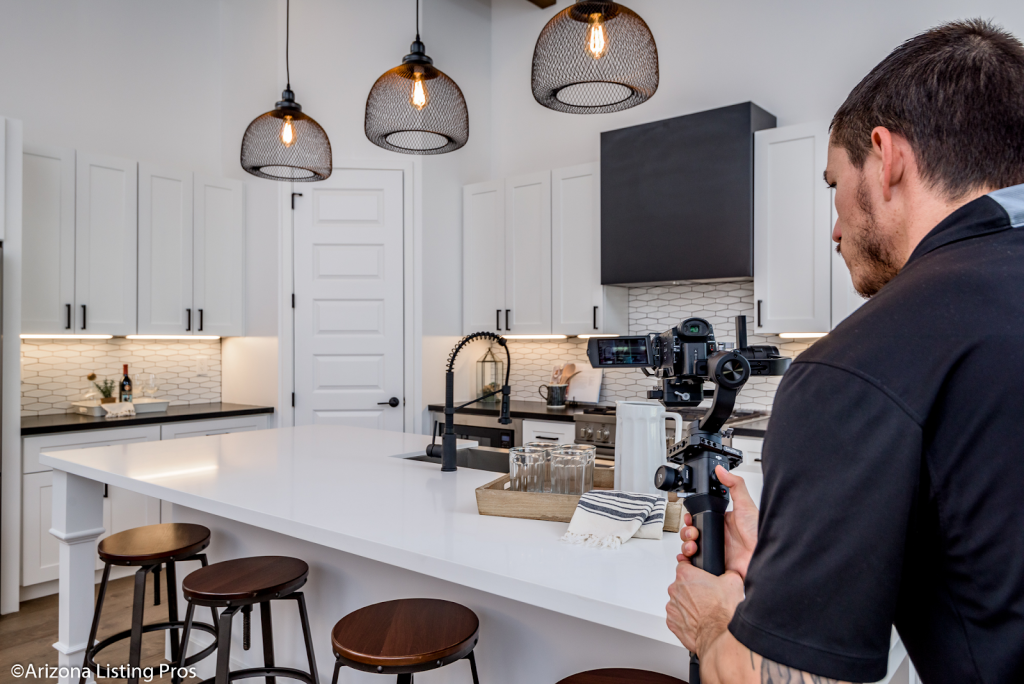
One of the simplest ways to make footage more editable is to hold the shot a little longer.
Avoid starting the camera movement at the exact moment recording begins.
Instead, allow a few seconds of stable footage before moving.
Do the same at the end.
This gives the editor clean frames to work with and makes it easier to create smooth cuts.
For example, if you slowly move toward a kitchen island, do not stop recording immediately when you reach the island.
Hold the final position for a moment.
Those extra seconds may seem insignificant while filming, but they can make a noticeable difference during editing.
3. Shoot Different Angles of Important Rooms
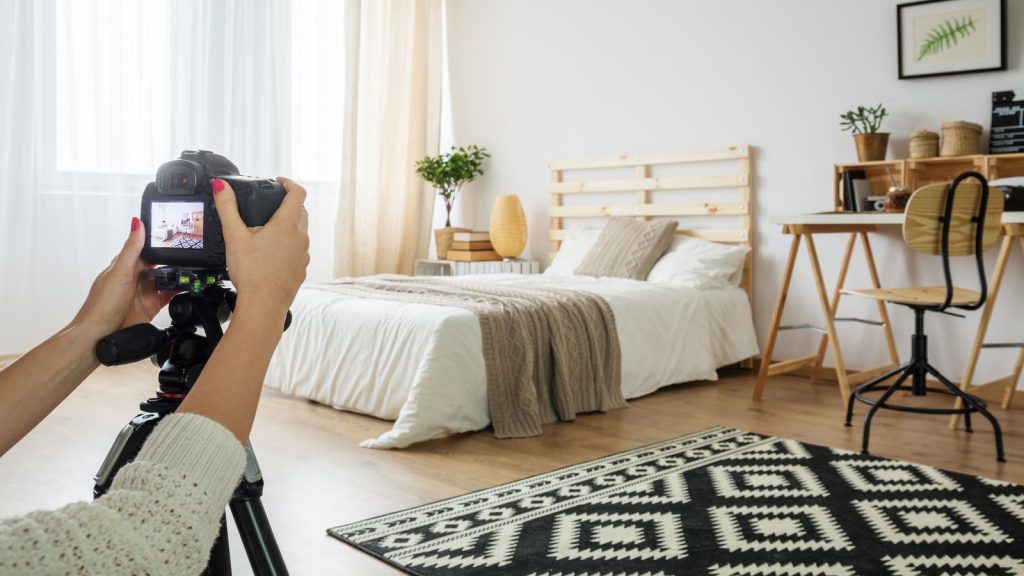
A room can often be shown effectively from more than one position.
For a living room, you might capture a wide shot from the entrance, another angle showing the relationship between the living and dining areas, and a few details of the fireplace or furniture.
For a kitchen, you might film the full space, the island, the appliances, and selected details.
This does not mean every room needs ten different shots.
Focus on the spaces and features that matter most.
Multiple useful angles allow the editor to choose the perspective that works best within the overall sequence.
4. Detail Shots Give the Editor More Ways to Build the Video
Wide shots explain a space.
Detail shots add variety.
A close-up of a faucet, countertop, light fixture, fireplace, hardware, tile, or architectural detail can provide a short visual break between larger shots.
These clips are also useful when the editor needs to shorten a sequence without making the video feel repetitive.
For example, instead of cutting directly from a kitchen wide shot to the living room, a quick detail of the kitchen’s finishes can create a more natural transition.
Small shots can have a big role in the final edit.
5. Film Transitions Between Spaces
Some of the most useful footage is not necessarily the most impressive.
A hallway.
A doorway.
A staircase.
A slow movement past an architectural feature.
These shots can help connect different rooms.
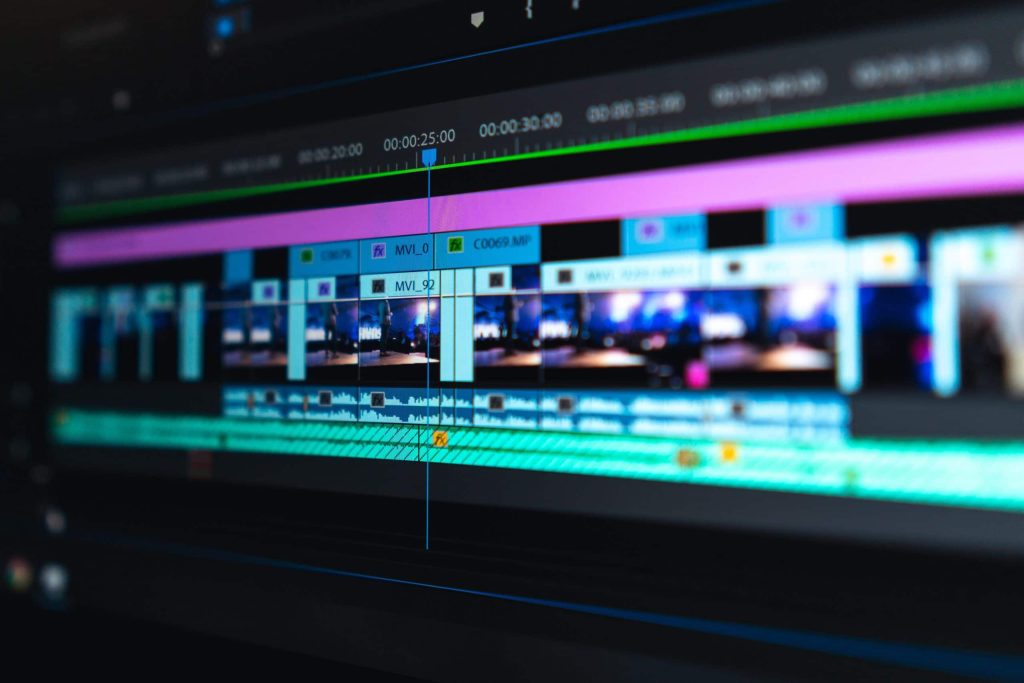
Without transition footage, an editor may have to make a hard cut from one unrelated space to another.
Both clips may look beautiful, but the sequence can still feel disconnected.
When walking through a property, look for natural moments that can help move the viewer from one area to the next.
6. Capture the Same Feature From More Than One Distance
Distance changes how a feature communicates.
A wide shot can show a fireplace as part of the living room.
A medium shot can make the fireplace more prominent.
A detail shot can highlight its materials or design.
Having different distances gives the editor more control over how much attention a feature receives.
It also prevents the final video from becoming a sequence of similarly framed shots.
7. More Footage Helps When Something Does Not Work in the Edit
Sometimes a shot simply does not work.
It may look good on location but feel too long when placed next to another clip.
It may have an awkward camera movement.
It may not match the rhythm of the rest of the footage.
It may show the same information as another shot.
This is normal.
Editing involves making choices, and not every recorded clip will make the final version.
Having additional footage means one unsuccessful shot does not leave a gap in the sequence.
8. Large Properties Need More Coverage
The bigger the property, the more important coverage becomes.
A large home may contain multiple bedrooms, bathrooms, living spaces, outdoor areas, stairs, hallways, and architectural features.
If only one or two shots are captured in each area, the editor may struggle to create a video that feels complete.
Large properties also benefit from more establishing shots because viewers need help understanding how different spaces relate to one another.
The goal is not to give every room equal screen time.
It is to give the editor enough material to decide which spaces deserve more attention.
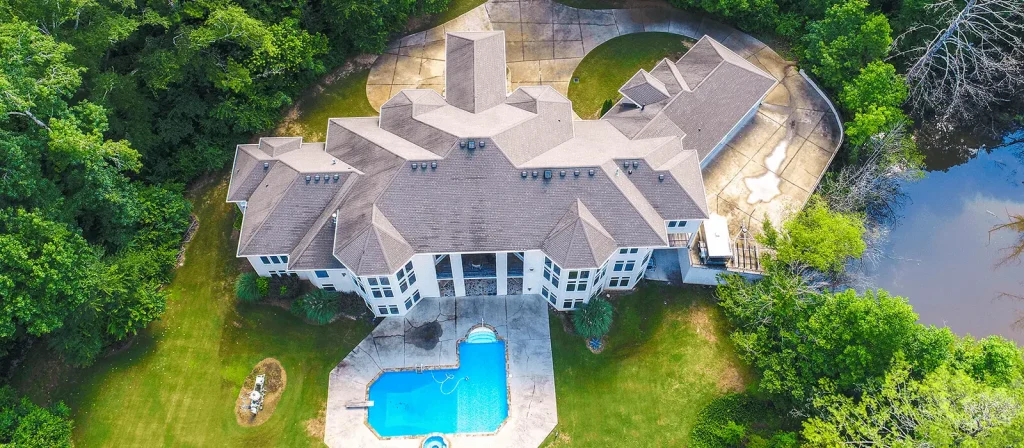
9. Exterior Areas Need Multiple Perspectives Too
The same principle applies outside the property.
A single wide shot of a backyard may show the overall space, but it cannot communicate everything about it.
Consider capturing:
- The overall backyard
- The connection between the house and outdoor area
- The pool or patio
- Landscaping details
- A view from the outdoor space
- Architectural details of the exterior
Different perspectives can help the editor create a more complete impression of the property.
This is especially useful for homes where outdoor living is one of the main selling points.
10. More Footage Does Not Mean Filming Without a Plan
There is an important distinction between more footage and more random footage.
Recording every movement several times can create unnecessary work for both the videographer and editor.
Instead, think about coverage.
For each important space, ask:
- Do I have a wide shot?
- Do I have another useful angle?
- Do I have a detail shot?
- Do I have enough footage at the beginning and end?
- Do I have something that can connect this room to the next one?
If the answer is yes, you probably have enough coverage.
The goal is not to fill a hard drive.
The goal is to give the editor useful choices.
11. Extra Footage Is Especially Valuable When the Final Video Is Short
It may seem counterintuitive, but short videos can require more options than long ones.
A 30-second social media video may use only a small percentage of the footage captured during a property shoot.
That does not mean the rest was wasted.
The editor needs to choose the strongest moments from a larger pool of footage.
A short final video needs every shot to contribute something.
Having multiple options makes it easier to find those shots.
Work with Lumatrix Media for Professional Real Estate Video Editing
At Lumatrix Media, we work with raw real estate footage and turn it into polished property videos with a clear flow and consistent pacing.
The more useful footage you provide, the more options we have to choose the right shots, build transitions, highlight important details, and create a stronger final edit.
Explore our samples and contact Lumatrix Media to start your next real estate video project.

- Facebook: Lumatrix Media
- Instagram: lumatrix.media
- Website: lumatrixmedia.com
- Email: lumatrix.media@gmail.com
Our blog
Lastest blog posts
Tool and strategies modern teams need to help their companies grow.
Realtors Should Have a Repeatable Listing Marketing Process
Learn why realtors need a repeatable listing marketing process to save time, maintain quality, reduce [...]
Reducing the Price Does Not Always Solve a Listing Problem
Learn why reducing the price of a home does not always lead to more offers [...]
Why Realtors Need Different Marketing Strategies for Different Price Ranges
Learn why real estate marketing strategies should change across different price ranges, from buyer expectations [...]
Why You Should Shoot More Real Estate Footage When Filming a Property
Contents hide 1. One Good Shot May Not Be Enough 2. Give Editors Enough Footage [...]
Why Filming for Social Media Is Different From Filming a Property Tour
Learn how filming for social media differs from a traditional property tour, including framing, pacing, [...]
Why Music Choice Can Change How Buyers Perceive a Property
Discover how music choice can influence the way buyers perceive a property, from mood and [...]
Why Small Rooms Need Different Camera Techniques
Learn why small rooms require different camera techniques in real estate photography and video, from [...]
Why Some Real Estate Footage Looks Good but Edits Badly
Learn why some real estate footage looks great on its own but becomes difficult to [...]