
Learn how filming for social media differs from a traditional property tour, including framing, pacing, shot selection, storytelling, and viewer attention.
1. The Purpose of the Video Comes First
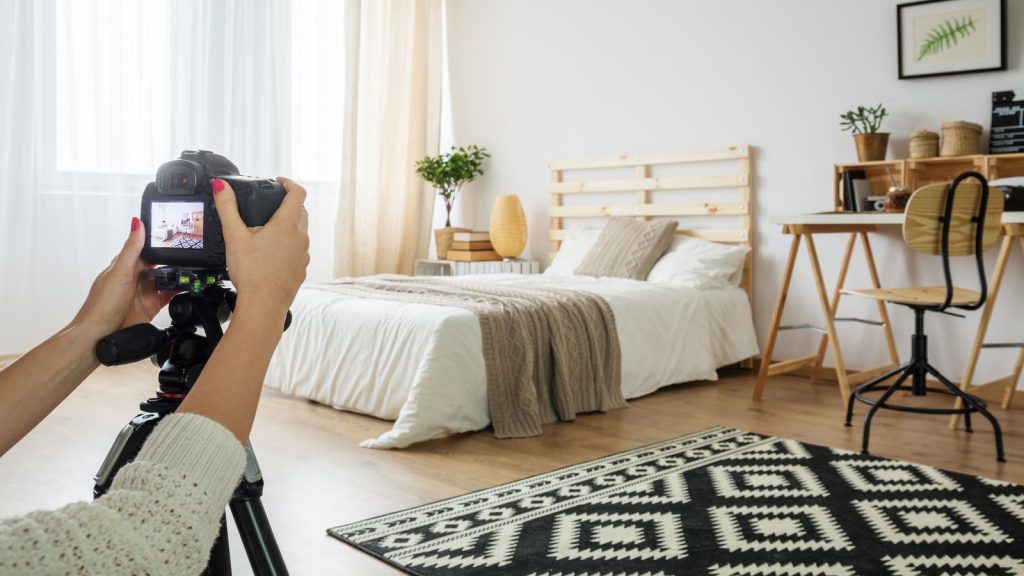
A property tour is primarily about showing the property.
The viewer should be able to understand the relationship between rooms, see important features, and get a reasonable sense of the home’s layout.
A social media video is often about stopping the scroll first.
The property is still the subject, but the video may focus on one particularly interesting feature, a transformation, a cinematic moment, a lifestyle idea, or a quick overview.
This changes what the camera needs to capture.
A long walkthrough can be useful for a property tour but may not be the most effective source material for a 20- or 30-second social video.
2. The First Shot Matters More on Social Media
In a property tour, the video can gradually introduce the home.
On social media, there may not be enough time for a slow introduction.
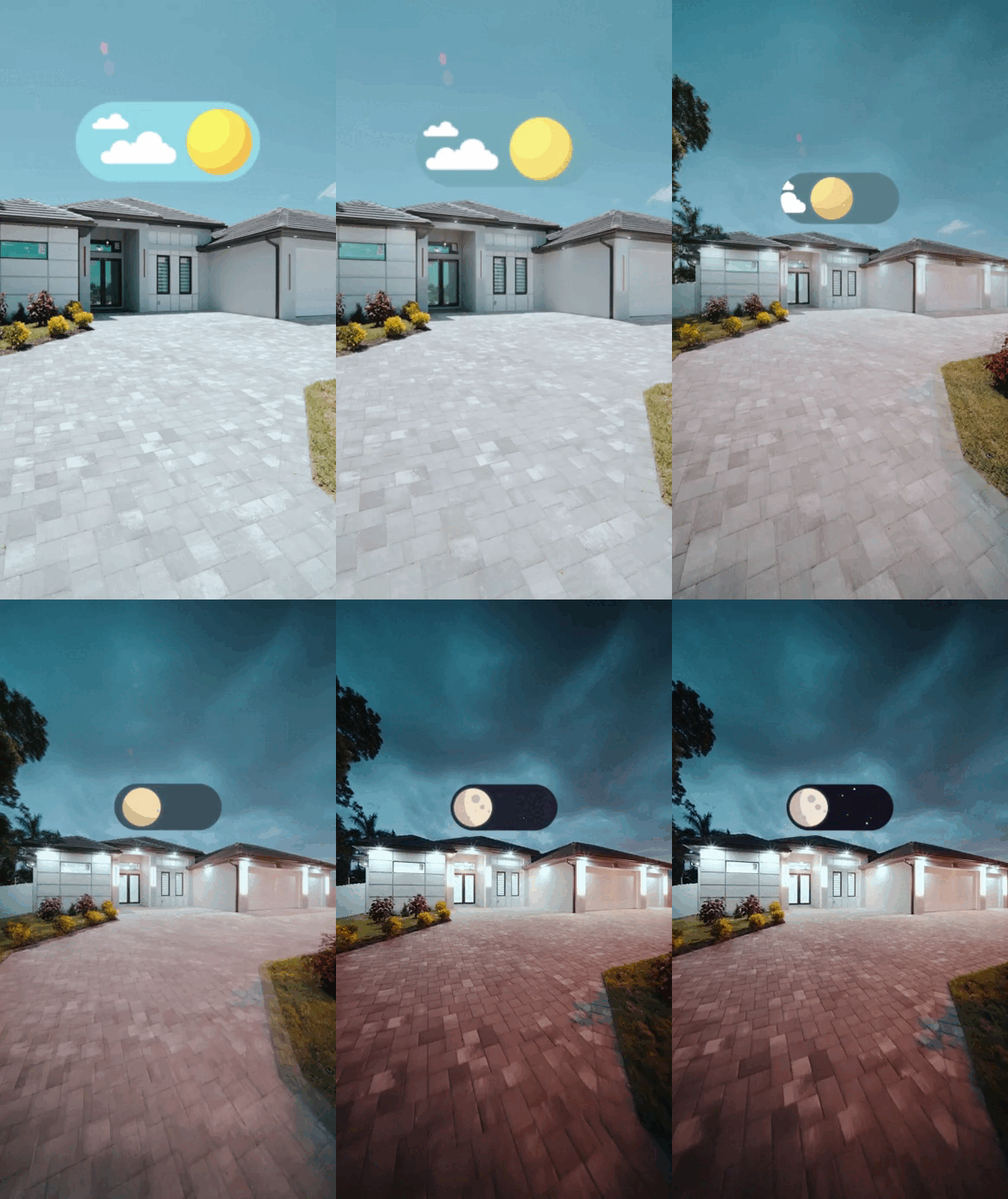
The opening shot often needs to communicate something visually interesting immediately.
This could be:
- A dramatic exterior
- A strong architectural feature
- A beautiful view
- A striking kitchen
- A pool or outdoor space
- A cinematic movement through the property
The objective is not necessarily to reveal everything at the beginning.
It is to give viewers a reason to keep watching.
3. Social Media Often Requires Different Framing
Traditional property tours are commonly filmed in landscape formats because the wider frame works well for showing rooms and architectural relationships.
Social media platforms often prioritize vertical video.
This changes how the property needs to be framed.
A wide living room that looks excellent in a horizontal composition may lose important information when cropped vertically. Similarly, a beautiful wide exterior may need a completely different composition to work effectively in a vertical frame.
This is why social media footage should ideally be planned for its final format rather than simply cropped afterward.
4. Social Videos Usually Need Tighter Shot Selection
A property tour may include many rooms and features.
A social video cannot always afford that level of coverage.
Instead of showing every bedroom, hallway, bathroom, and corner, the video may focus on the strongest parts of the property.
For example, a short video might use:
- An exterior establishing shot
- A dramatic entry
- The kitchen
- A key living area
- The primary bedroom
- A standout outdoor feature
The goal is not to provide a complete tour.
It is to create a compact visual story that makes the property worth exploring further.
5. Pacing Usually Needs to Be Faster
Social media users are accustomed to consuming short-form content quickly.
That does not mean every real estate video should have extremely fast cuts.
It means the pacing needs to be intentional.
Long shots can work when the visual itself is compelling. Faster cuts can work when the property has many features to communicate quickly.
A traditional property tour can allow a room to remain on screen for longer because the viewer is actively exploring the space.
A social video often has to earn every additional second.
6. Movement Has a Different Role
Camera movement in a property tour often helps the viewer understand space.
A smooth walkthrough can show how rooms connect or how large a room feels.
In a social media video, movement can also function as an attention tool.
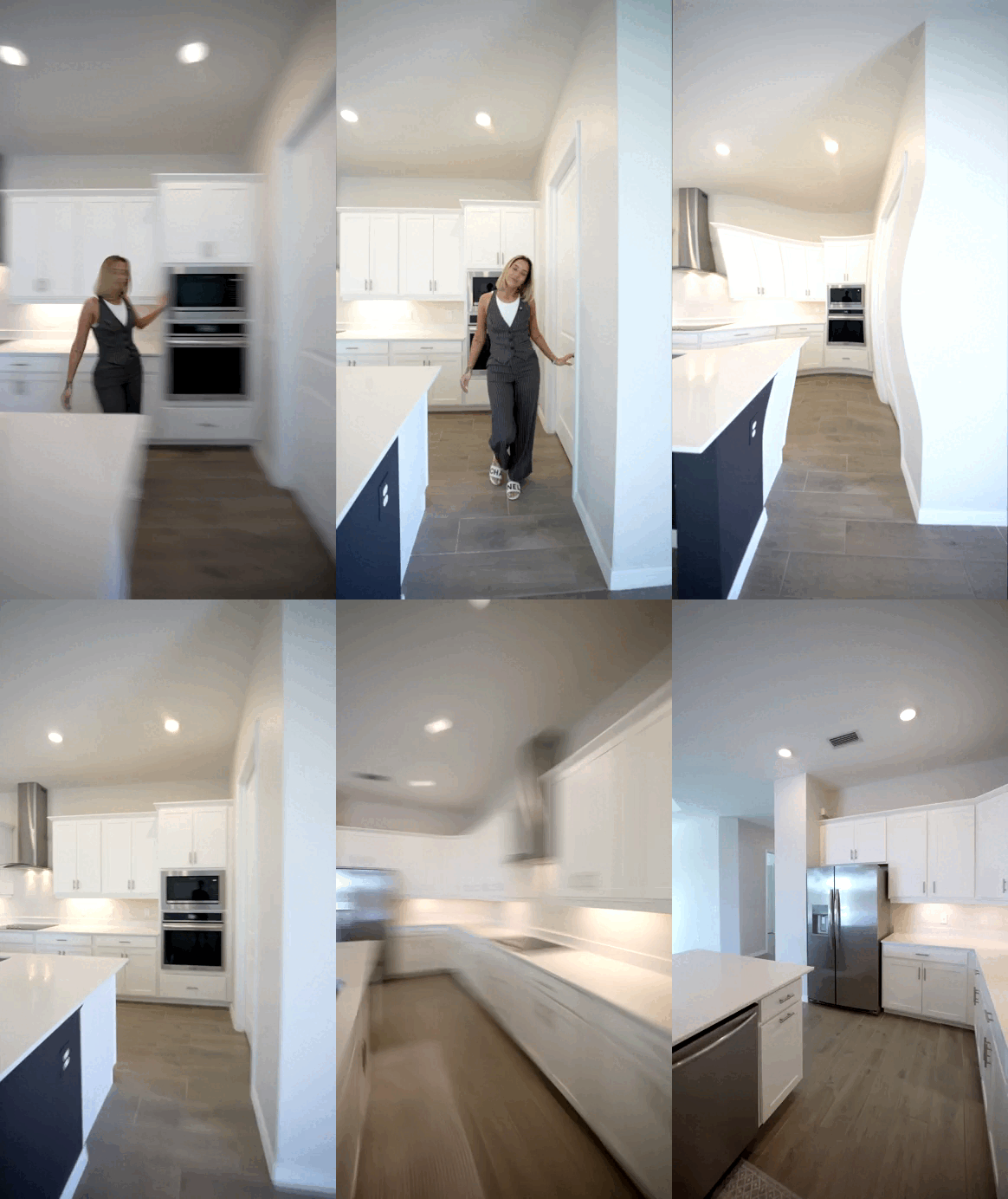
A reveal around a corner, a quick push toward a feature, or a transition between spaces can create visual momentum.
However, movement should still have a purpose.
If every shot contains a dramatic camera move, the video can become visually exhausting and make the property harder to appreciate.
7. One Property Can Need Multiple Versions
Filming for both a property tour and social media does not necessarily mean creating completely separate shoots.
Good planning can produce footage that supports multiple formats.
For example, a single property shoot might capture:
- Wide horizontal walkthrough footage
- Vertical-friendly compositions
- Detail shots
- Short movement clips
- Exterior footage
- Drone footage
- Lifestyle-oriented moments
The editor can then build different versions for different platforms.
This is more efficient than trying to force one finished video to work everywhere.
8. Social Media Footage Needs More Attention to the First Few Seconds
A property tour can build interest gradually.
A social media video often has a much smaller window to capture attention.
That makes the opening sequence particularly important.
The first few shots should establish what makes the property worth watching.
This does not always mean showing the most expensive feature immediately.
A strong opening could instead create curiosity.
For example, a partially revealed view, an unusual architectural detail, or a movement toward an impressive space can encourage viewers to continue watching.

9. Text and Graphics Can Affect How You Film
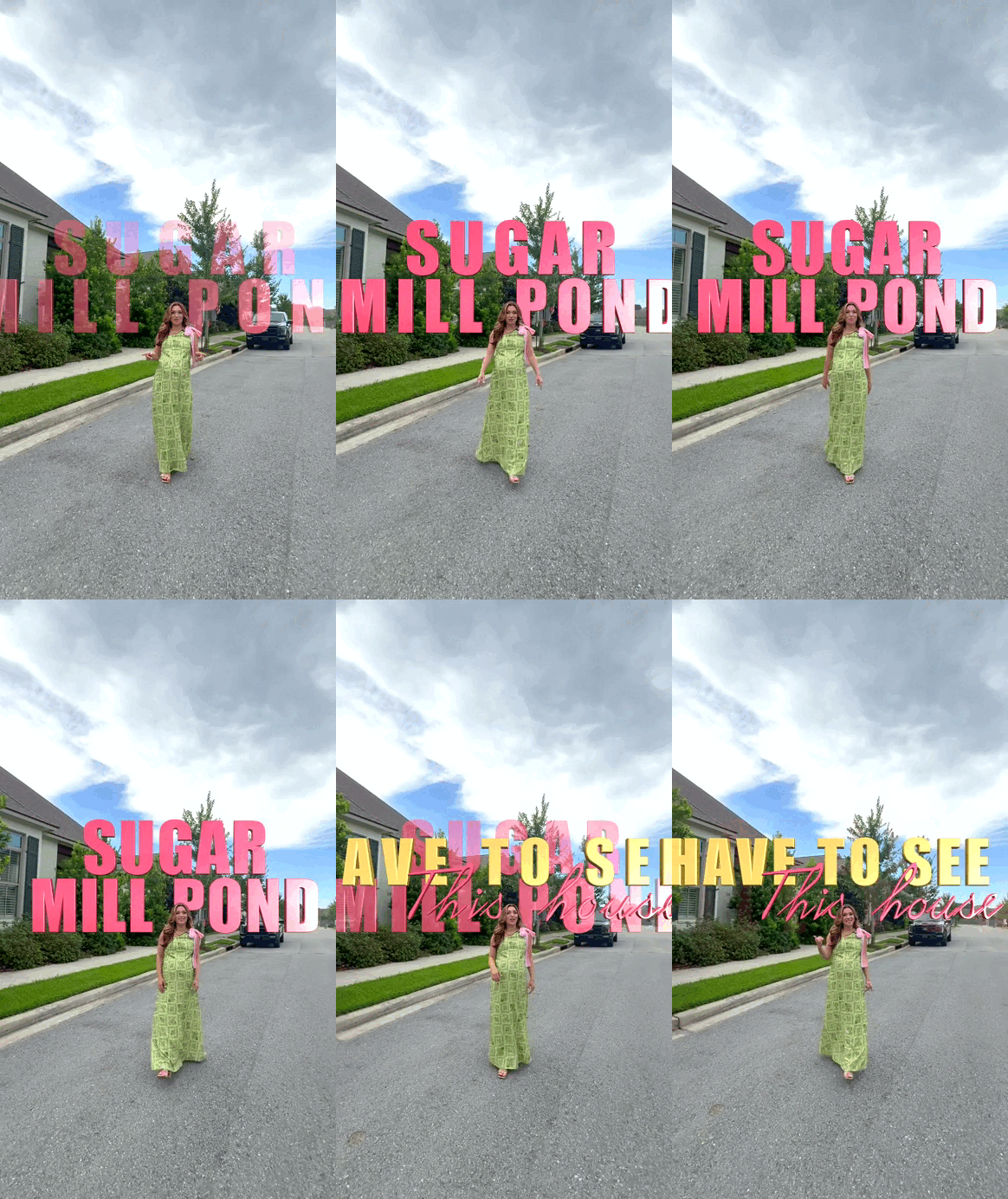
Social media videos often include captions, titles, prices, locations, or other on-screen information.
That needs to be considered while filming.
If important architectural features occupy every part of the frame, there may be no clean space for text.
A composition with intentional negative space can make graphics easier to add later.
This is particularly important for vertical videos, where screen space is already limited.
Filming should therefore consider not only what the viewer needs to see, but also where additional information may appear.
10. Social Media Does Not Always Need to Show the Whole Property
One of the biggest differences is the amount of information the video is expected to deliver.
A property tour answers:
“What is this home like?”
A social media video may instead answer:
“What is interesting about this home?”
That distinction changes the entire filming strategy.
A 20-second video does not need to explain every room.
It may simply highlight the kitchen, view, pool, architecture, or one unusual feature that makes the listing memorable.
The goal is often to create enough interest for viewers to explore the full listing afterward.
11. Editing Starts at the Filming Stage
The difference between the two formats becomes even clearer during editing.
A property tour usually needs continuity, logical room progression, and enough coverage to create a coherent walkthrough.
A social video may prioritize rhythm, visual hooks, quick transitions, music synchronization, and short sequences.
That means the person filming should think about the final edit before recording.
Instead of asking only whether a shot looks good, consider whether it provides something useful for the intended format.
A short vertical clip may need to work on its own.
A walkthrough shot may need to connect naturally with the next room.
Both can come from the same property, but they serve different purposes.
12. The Best Approach Depends on Where the Video Will Be Used
There is no universally better filming style.
A full property tour and a social media reel serve different functions.
A detailed tour can help potential buyers understand the home.
A short social video can introduce the property to people who were not actively searching for it.
For many listings, using both formats can make sense.
The important thing is to plan the footage around the intended viewing experience rather than filming one generic set of clips and deciding later how to use them.
Work with Lumatrix Media for Professional Real Estate Video Editing
At Lumatrix Media, we edit real estate videos for different purposes, from clean property tours to short-form social media content.
We adapt pacing, framing, music, transitions, and shot selection to fit the final format while keeping the property clear and natural.
Explore our samples and contact Lumatrix Media to start your next real estate video project.

- Facebook: Lumatrix Media
- Instagram: lumatrix.media
- Website: lumatrixmedia.com
- Email: lumatrix.media@gmail.com
Our blog
Lastest blog posts
Tool and strategies modern teams need to help their companies grow.
Realtors Should Have a Repeatable Listing Marketing Process
Learn why realtors need a repeatable listing marketing process to save time, maintain quality, reduce [...]
Reducing the Price Does Not Always Solve a Listing Problem
Learn why reducing the price of a home does not always lead to more offers [...]
Why Realtors Need Different Marketing Strategies for Different Price Ranges
Learn why real estate marketing strategies should change across different price ranges, from buyer expectations [...]
Why You Should Shoot More Real Estate Footage When Filming a Property
Learn why filming more real estate footage during a property shoot gives editors more options, [...]
Why Filming for Social Media Is Different From Filming a Property Tour
Contents hide 1. The Purpose of the Video Comes First 2. The First Shot Matters [...]
Why Music Choice Can Change How Buyers Perceive a Property
Discover how music choice can influence the way buyers perceive a property, from mood and [...]
Why Small Rooms Need Different Camera Techniques
Learn why small rooms require different camera techniques in real estate photography and video, from [...]
Why Some Real Estate Footage Looks Good but Edits Badly
Learn why some real estate footage looks great on its own but becomes difficult to [...]