
Learn practical framing and composition tips for real estate videos to showcase properties clearly, improve visual flow, and attract serious buyers.
Good framing and composition are the foundation of effective real estate videos. Even with high-end equipment and professional editing, poor framing can make a property feel smaller, darker, or less appealing than it really is. This article breaks down practical composition techniques that help real estate videos look clean, spacious, and trustworthy without overcomplicating the process.
Why Framing and Composition Matter in Real Estate Video
In real estate videography, the camera does more than record space. It shapes how viewers perceive size, flow, and value. Poor composition can distort proportions, hide important features, or create visual discomfort that viewers may not consciously identify but still react to.
Strong framing helps:
- Make rooms feel balanced and open
- Guide the viewer’s eye naturally
- Communicate layout clearly
- Build trust through accurate representation
For agents, this directly affects buyer confidence. For editors, it determines how much can be fixed or not fixed in post-production.
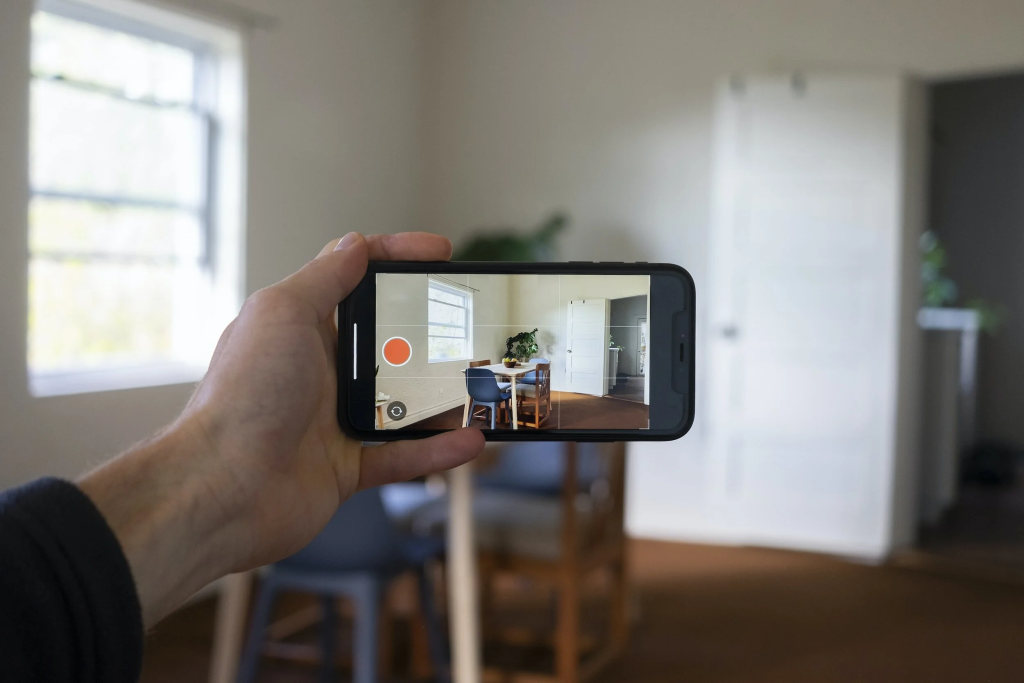
Use Eye-Level Framing to Maintain Natural Perspective
One of the most common mistakes in real estate videos is filming too high or too low.
Eye-level framing:
- Mimics how buyers experience the space in real life
- Keeps vertical lines straight and natural
- Prevents ceilings or floors from dominating the frame
As a general guideline, the camera should sit slightly below eye level when walking through a property. This creates a comfortable, neutral perspective that feels realistic rather than cinematic for the sake of style.
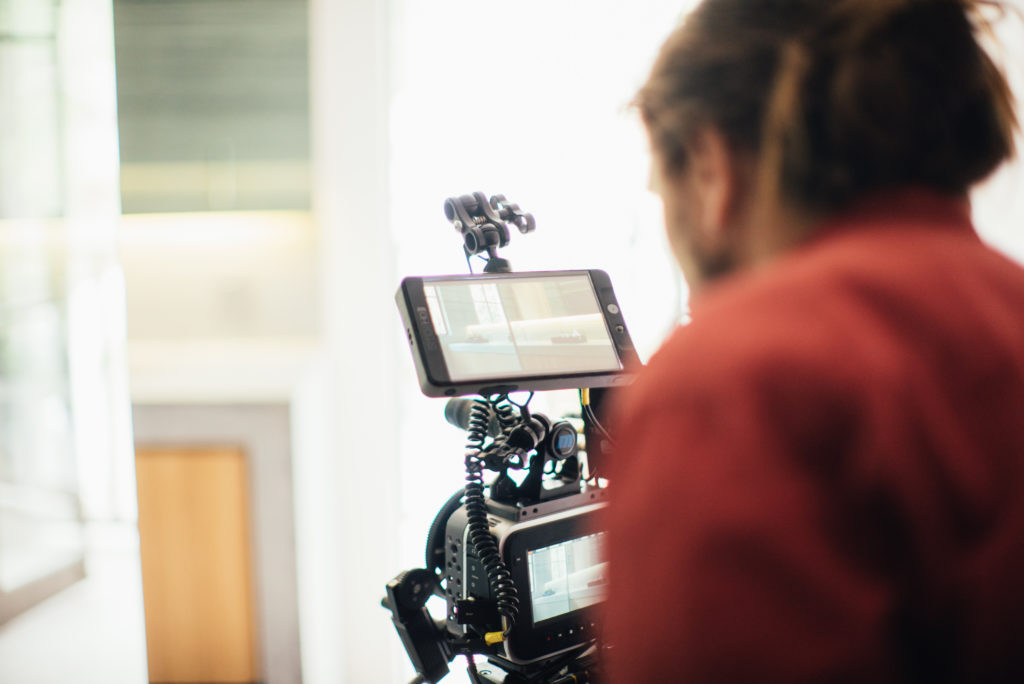
Keep Vertical Lines Straight
Crooked vertical lines instantly make a video feel unprofessional.
To maintain clean composition:
- Keep the camera level at all times
- Align door frames and walls vertically
- Avoid tilting unless intentionally motivated
Straight lines are especially important in real estate video editing, because correcting perspective in post can reduce image quality or crop valuable frame space.
Frame to Show Depth, Not Just Width
Wide shots are essential in real estate videos, but width alone does not convey space. Depth is equally important.
Effective framing includes:
- Foreground elements like doorways or furniture edges
- Clear mid-ground and background separation
- Shots that look into rooms, not just across them
This layered composition helps rooms feel larger and more dimensional, even without ultra-wide lenses.
Avoid Over-Centering Every Shot
Perfectly centered framing can feel static if overused.
While symmetry works well for:
- Hallways
- Entryways
- Architectural focal points
Other spaces benefit from slightly off-center framing that follows the rule of thirds. This creates visual interest while still keeping the space readable.
Balanced variation keeps the video engaging without distracting the viewer.
Respect the Natural Flow of the Property
Framing should support how people naturally move through the home.
Good compositional flow:
- Follows logical walking paths
- Avoids abrupt angle changes
- Maintains consistent screen direction
When framing ignores spatial flow, viewers may feel disoriented—even if they cannot explain why.
Let Natural Light Define the Frame
Lighting and composition are closely connected.
When framing a shot:
- Avoid placing bright windows directly behind key areas
- Use windows as side light rather than backlight
- Frame toward light whenever possible
This helps preserve detail and reduces the need for heavy correction during real estate video editing.
Leave Space for Text and Graphics
Modern real estate videos often include motion graphics or text overlays.
Good framing anticipates this by:
- Leaving negative space on walls or open areas
- Avoiding cluttered backgrounds
- Keeping key features unobstructed
This makes it easier to add information later without covering important details.
Common Framing Mistakes to Avoid
Even experienced videographers fall into habits that hurt composition.
Watch out for:
- Cutting off door frames or furniture edges
- Shooting too close to walls
- Using extreme wide angles that distort proportions
- Letting objects block entry points or walkways
These mistakes are difficult to fix in editing and can reduce the perceived quality of the property.
How Framing Affects Editing Quality
From a real estate video editing perspective, good framing saves time and preserves quality.
Well-framed footage:
- Requires less cropping
- Holds up better to stabilization
- Maintains resolution across platforms
Poor framing limits editing flexibility and can force compromises that affect the final result.
Framing for Different Platforms
Composition should also consider where the video will be viewed.
- Horizontal framing works best for websites and YouTube
- Vertical framing may suit short social clips
- Center-weighted composition helps with cross-platform cropping
Planning ahead allows one shoot to support multiple marketing uses.
Why Professional Guidance Still Matters
While framing fundamentals are easy to learn, applying them consistently takes experience. Professional videographers and editors understand how small framing decisions affect buyer perception and marketing performance.
In competitive real estate markets, these details often separate average listings from standout ones.
How Lumatrix Media Supports Strong Visual Presentation
Lumatrix Media works with agents and videographers worldwide, providing real estate video editing services that respect and enhance good framing rather than fighting against it. Our editors understand how composition affects pacing, clarity, and final delivery across platforms.
If you already have footage and want it refined into clean, professional real estate videos, you can explore our samples and contact Lumatrix Media to discuss a potential collaboration.

Looking for more tips on filming and editing real estate videos? Check out our other blog posts.
Using Motion Graphics and Text to Highlight Key Property Features
5 Cinematic Techniques to Make Any Property Look Luxurious
Using Silence and Natural Sound in Real Estate Videos
- Facebook: Lumatrix Media
- Instagram: lumatrix.media
- Website: https://lumatrixmedia.com/
- Email: lumatrix.media@gmail.com
Our blog
Lastest blog posts
Tool and strategies modern teams need to help their companies grow.
Realtors Should Have a Repeatable Listing Marketing Process
Learn why realtors need a repeatable listing marketing process to save time, maintain quality, reduce [...]
Reducing the Price Does Not Always Solve a Listing Problem
Learn why reducing the price of a home does not always lead to more offers [...]
Why Realtors Need Different Marketing Strategies for Different Price Ranges
Learn why real estate marketing strategies should change across different price ranges, from buyer expectations [...]
Why You Should Shoot More Real Estate Footage When Filming a Property
Learn why filming more real estate footage during a property shoot gives editors more options, [...]
Why Filming for Social Media Is Different From Filming a Property Tour
Learn how filming for social media differs from a traditional property tour, including framing, pacing, [...]
Why Music Choice Can Change How Buyers Perceive a Property
Discover how music choice can influence the way buyers perceive a property, from mood and [...]
Why Small Rooms Need Different Camera Techniques
Learn why small rooms require different camera techniques in real estate photography and video, from [...]
Why Some Real Estate Footage Looks Good but Edits Badly
Learn why some real estate footage looks great on its own but becomes difficult to [...]